
How do bees make honey?
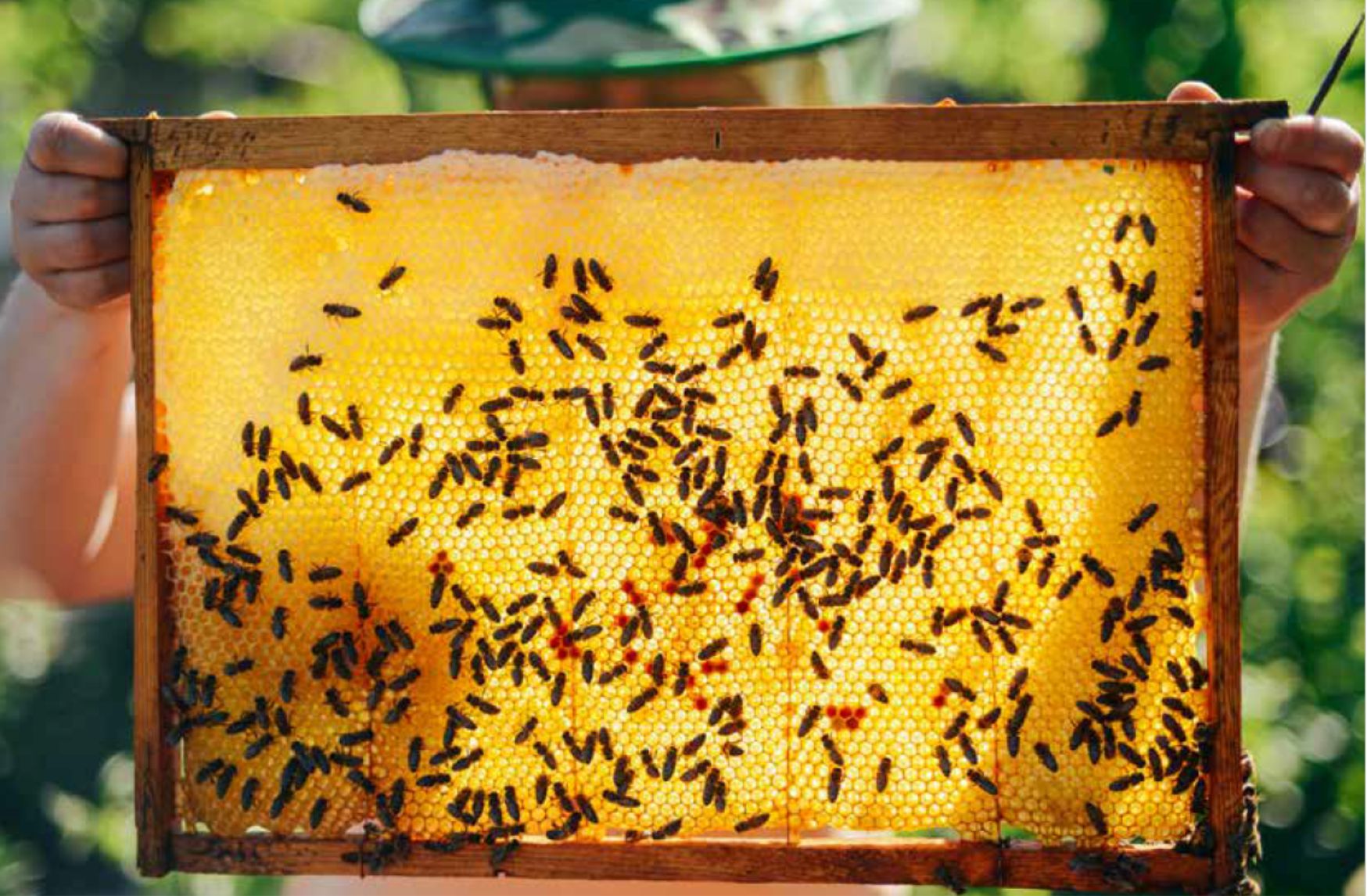
Honey production begins when a worker bee collects nectar from colorful, blooming flowers. This sticky liquid consists of trace elements, sugars, and minerals. The worker bee stores the nectar in her honey stomach, a reservoir located near the esophagus. When her honey stomach is full, she flies back to her hive, where a fascinating production process begins…
Inside the hive, the bee passes the nectar on to other younger bees, mouth-to-mouth. During this process, saliva is added to the nectar each time. That saliva contains enzymes and beneficial bacteria. The enzymes break down the sugars into glucose and fructose, and the bacteria ensure a long shelf life. After this process, the honey is stored in honeycombs, dried by the flapping of the bees’ wings, and sealed with a thin layer of wax.
The beekeeper can start harvesting!
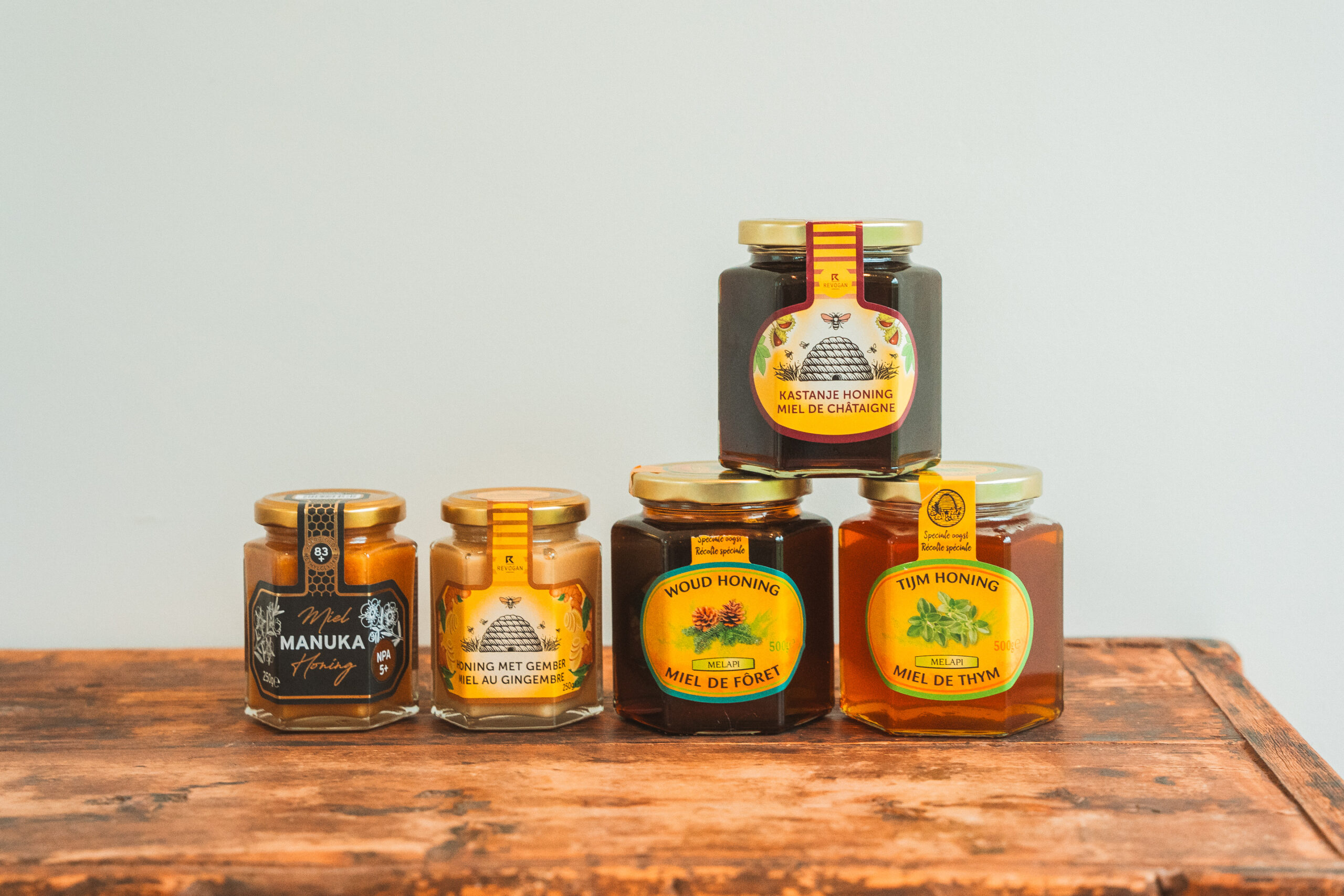
Melapi Honey
Honey is a natural product free of preservatives, additives, colorings, or artificial flavors. Honey offers many health benefits. It is packed with vitamins, minerals, carbohydrates, and simple sugars, and is rich in antioxidants. Since ancient times, it has been used as a beauty product or as a natural remedy for all kinds of ailments.
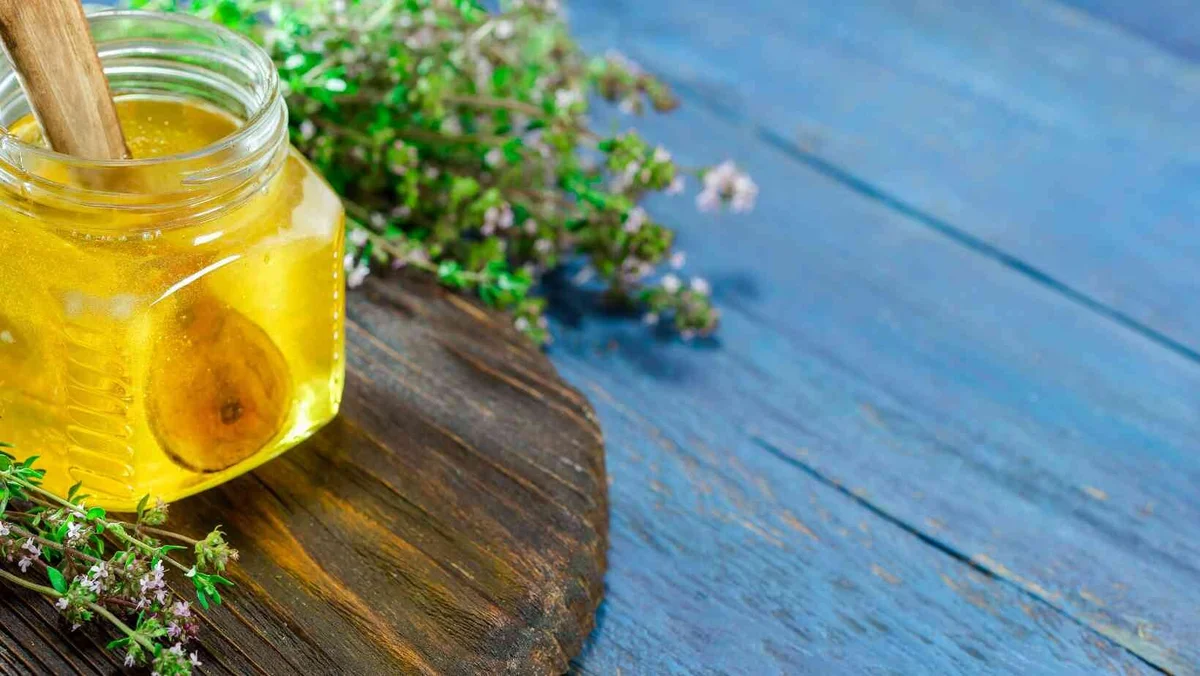
Thyme Honey
This high-quality herbal honey was harvested from wild thyme plants. It has a fine crystalline texture and a distinctive thyme flavor. It has particularly strong antiseptic properties. It is often used together with dried thyme to make cough syrup.
- Known for its beneficial effects on the respiratory system.
- Contains antioxidants.
- Harvest: April–June.
- Origin: EU honey.
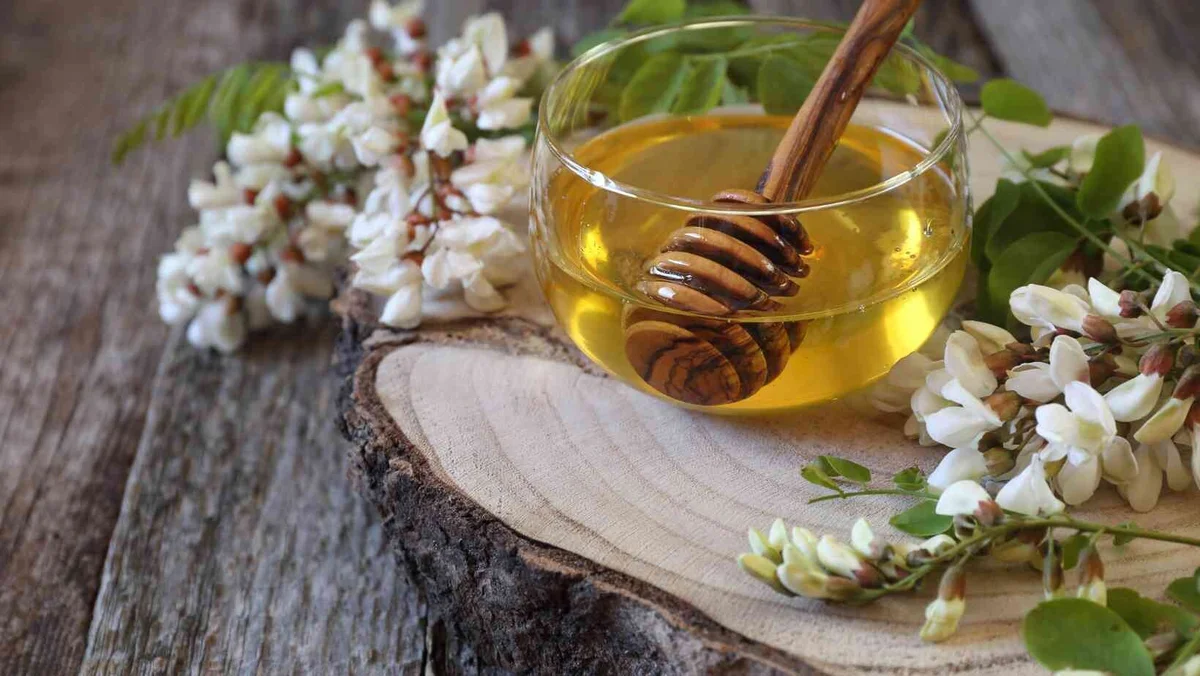
Acacia Honey
The long blooming season of acacia trees is the source of this exceptional spring honey. It has a clear color with a golden-yellow hue. It is rightly a favorite among many honey lovers because of its delicate, mild, and refined flavor. This honey was processed and packaged without heating. All of its valuable nutrients have therefore been preserved intact.
- Known for its beneficial effects on the respiratory system.
- Contains antioxidants.
- Harvest: spring.
- Origin: EU honey.
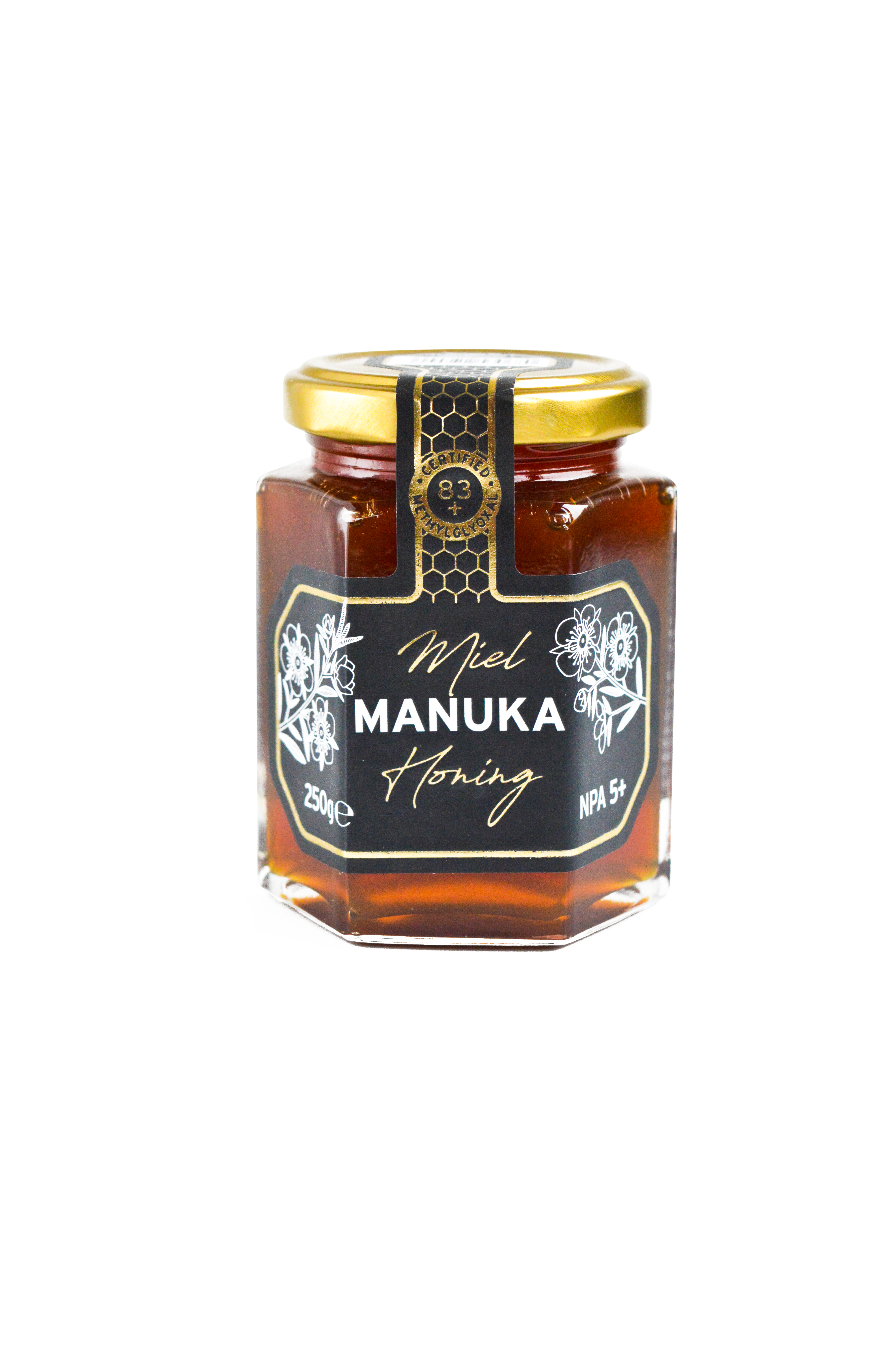
Manuka Honey
A dark honey derived from the rare Manuka plant native to New Zealand (synonyms: Tea tree, Leptospermum scoparium, Leptospermum polyglaifolium). In Maori medicine, Manuka has been used for centuries for its healing properties.
- Powerful honey.
- Very strong antibacterial properties due to the high methylglyoxal (MGO) content—>, NPA 5+ = MGO 83+
- Perfect for relieving symptoms of nasal, throat, and ear conditions.
- Origin: New Zealand.
Would you like to order our products for business purposes?
Please contact your regional representative.
Professionals can place orders directly with us.
Those who already have a login can order the foods we offer through the online store.



Annelies
Antwerp/ Limburg/
Flemish Brabant (Leuven-Tienen-Diest region)
annelies.dc@revogan.be
Why Revogan?
" (a Ghent pharmacy)
Nutrition & Health
, a Belgian family-owned business since 1965
carefully curated